The United States is facing a critical caregiver shortage in 2026, with millions of positions projected to remain vacant over the next decade. While the demand is high, navigating the immigration landscape requires a clear understanding of which roles actually qualify for legal sponsorship.

The Reality of “Caregiver” Visa Eligibility
In the U.S. immigration system, “caregiver” is a broad term. Eligibility for sponsorship depends heavily on the professional level of the role.
1. Licensed Healthcare Professionals (High Eligibility)
Roles that require advanced degrees and state licenses have the strongest path to sponsorship, primarily through the H-1B “Specialty Occupation” visa.
- Eligible Roles: Registered Nurses (RN) with a BSN, Physical Therapists (PT), Occupational Therapists (OT), and Speech-Language Pathologists.
- Key Requirement: The position must typically require at least a Bachelor’s degree, and the candidate must possess that degree in a relevant field.
2. Non-Licensed Caregivers (Limited Eligibility)
Roles such as Certified Nursing Assistants (CNA), Home Health Aides, and Personal Care Aides generally do not qualify for H-1B visas because a Bachelor’s degree is not a standard requirement for these jobs.
- Alternative Paths: These roles may occasionally qualify for an EB-3 “Other Workers” Green Card, but this process is slow (3–4 years) and employer interest is limited due to high costs.
Top Visa Categories for 2026
Option 1: H-1B Visa (Licensed Professionals)
The H-1B remains the primary route for specialized healthcare workers.
- The 2026 Landscape: A weighted lottery system now prioritizes higher salaries. Additionally, a $100,000 supplemental fee applies to new petitions for candidates currently outside the U.S.
- Cap-Exempt Loophole: Academic medical centers and nonprofit research hospitals are “cap-exempt.” They do not participate in the lottery and are exempt from the $100,000 fee, allowing them to hire year-round.
Option 2: TN Visa (Canadian & Mexican Citizens)
Citizens of Canada and Mexico have a significant advantage.
- Benefits: No annual cap, no lottery, and no $100,000 fee.
- Roles: Available for RNs, PTs, and OTs with valid job offers. Canadians can often process this directly at the border.
Option 3: F-1 Student to H-1B (The “In-Country” Path)
Many aspiring caregivers move to the U.S. as students first.
- The Strategy: Enroll in a U.S. BSN program $\rightarrow$ Use OPT work authorization (12–36 months) $\rightarrow$ Transition to H-1B.
- Financial Advantage: Since you are already in the U.S. when you switch status, the employer typically avoids the $100,000 fee, making you a much more attractive hire.
Option 4: J-1 Au Pair (Childcare Only)
This visa is restricted to individuals aged 18–26 for childcare in a host family setting. It cannot be used for elder care or nursing home employment.
Mandatory Requirements for International Nurses (RNs)
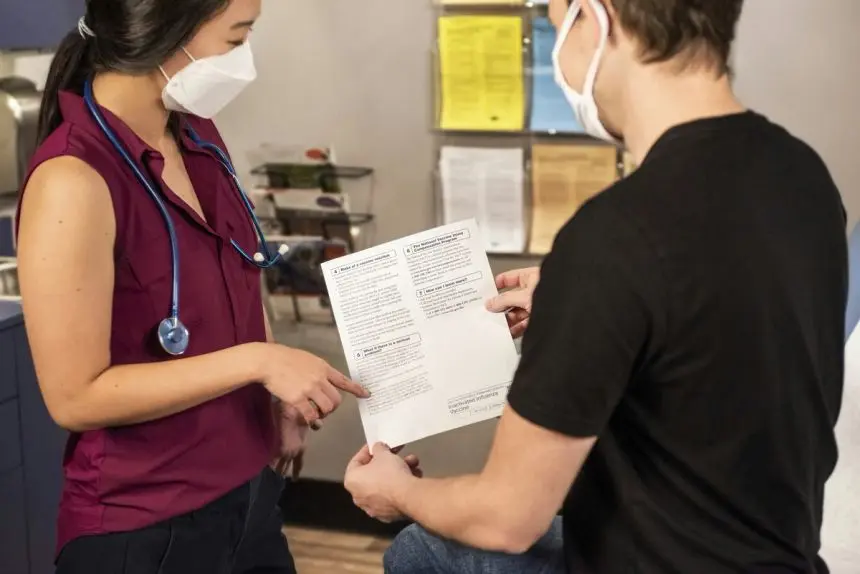
To qualify for sponsorship, international nurses must complete several rigorous steps:
- Educational Equivalency: You must hold a Bachelor of Science in Nursing (BSN). Associates degrees or diplomas are generally insufficient for H-1B status.
- VisaScreen Certificate: A federal requirement that verifies your foreign education, licenses, and English skills.
- English Proficiency: You must pass the IELTS Academic (6.5 overall/7.0 speaking) or the OET Nursing (Grade B in all sections). The OET is often preferred as it focuses on clinical scenarios.
- NCLEX-RN Exam: The mandatory U.S. licensing exam. Most employers require you to pass this before they will begin the expensive visa petition process.
Red Flags: Avoiding Caregiver Sponsorship Scams

The high demand for caregivers has led to an increase in fraudulent schemes. Protect yourself by watching for these red flags:
- Upfront Recruitment Fees: In the U.S., it is illegal for an employer to charge a candidate for H-1B filing fees. Legitimate agencies do not charge “placement fees” to the worker.
- “Work Now, Visa Later”: It is strictly illegal to work on a B-1/B-2 tourist visa. Any employer suggesting you work “off the books” while they “fix your status” is putting your future at risk. Working without authorization can lead to a permanent ban from the U.S.
FAQ
Can I work as a CNA while studying nursing?
On an F-1 visa, you are generally limited to on-campus work. Off-campus work (like being a CNA) requires specific “Curricular Practical Training” (CPT) authorization from your school and must be part of your academic program.
Are some states easier for licensing?
While all states require the NCLEX, some have faster processing times or are part of the Nurse Licensure Compact (NLC), which allows you to practice in multiple states with one license.
Can I change my visa type later?
Yes. Many professionals start on a TN or H-1B and eventually transition to an EB-3 Green Card for permanent residency once they have established themselves with a U.S. employer.