
In 2026, securing a position in Canada with visa sponsorship has become a transformative path for professionals worldwide. As various sectors face a tightening labor market, high-demand roles are providing a gateway for skilled individuals to join Canada’s robust and growing economy.
From digital innovators and medical professionals to technical engineers and trade specialists, Canada is offering more than just employment—it is offering a long-term future. Below is a detailed look at how to navigate these opportunities.
Understanding Visa-Sponsored Employment in Canada
A visa-sponsored job is a role where a Canadian organization assists a foreign candidate’s immigration journey. This usually involves providing a formal job offer and managing the legal paperwork required for a work permit or permanent residency.
Crucially, employers often must secure a Labour Market Impact Assessment (LMIA), a document proving that no qualified local citizen or permanent resident was available to fill the position. These roles typically fall under frameworks like the Temporary Foreign Worker Program (TFWP), the Global Talent Stream, or various Provincial Nominee Programs (PNP).
Key Sectors for Visa Sponsorship
Sponsorship is most frequently available in industries experiencing significant talent gaps.
1. Healthcare Services
The medical field remains a top priority for international recruitment. Many Canadian facilities provide relocation and licensing support.
- Common Roles: Registered Nurses (RNs), Licensed Practical Nurses (LPNs), Lab Technicians, Physiotherapists, and Personal Support Workers.
- Top Regions: Ontario, British Columbia, and Alberta.
2. Information Technology (IT)
Canada’s tech hubs continue to expand, seeking specialized global talent to maintain their competitive edge.
- Common Roles: Software Engineers, Cybersecurity Analysts, Data Scientists, Cloud Architects, and Web Developers.
- Top Regions: Ontario (Toronto), British Columbia (Vancouver), and Quebec (Montreal).
3. Engineering & Infrastructure
Ongoing national projects in construction and energy require experienced technical leads.
- Common Roles: Civil, Mechanical, Electrical, Petroleum, and Manufacturing Engineers.
- Top Regions: Alberta, Ontario, and Saskatchewan.
4. Hospitality & Tourism
Tourist destinations often rely on international staff to manage peak seasons and management needs.
- Common Roles: Executive Chefs, Hotel Managers, Restaurant Supervisors, and Housekeeping Leads.
- Top Regions: British Columbia and Quebec.
5. Skilled Trades
Technical manual labor is one of the fastest routes to sponsorship due to a critical shortage of domestic tradespeople.
- Common Roles: Electricians, Plumbers, Industrial Welders, Carpenters, and Heavy Equipment Operators.
- Top Regions: Manitoba, Alberta, and Ontario.
Prominent Companies Known for Sponsoring Global Talent
While sponsorship depends on specific role requirements and current LMIA status, the following organizations frequently hire internationally:
- Technology: Shopify, Google Canada, Microsoft Canada, Amazon Canada, CGI Inc.
- Banking: RBC, Scotiabank, TD Bank Group.
- Telecommunications: TELUS, Bell Canada.
- Manufacturing & Energy: Magna International, Bombardier, Enbridge.
- Hospitality & Retail: Tim Hortons, McDonald’s Canada, Fairmont Hotels, Loblaw Companies.
- Aviation: Air Canada, WestJet.
Step-by-Step Guide to Landing a Sponsored Role
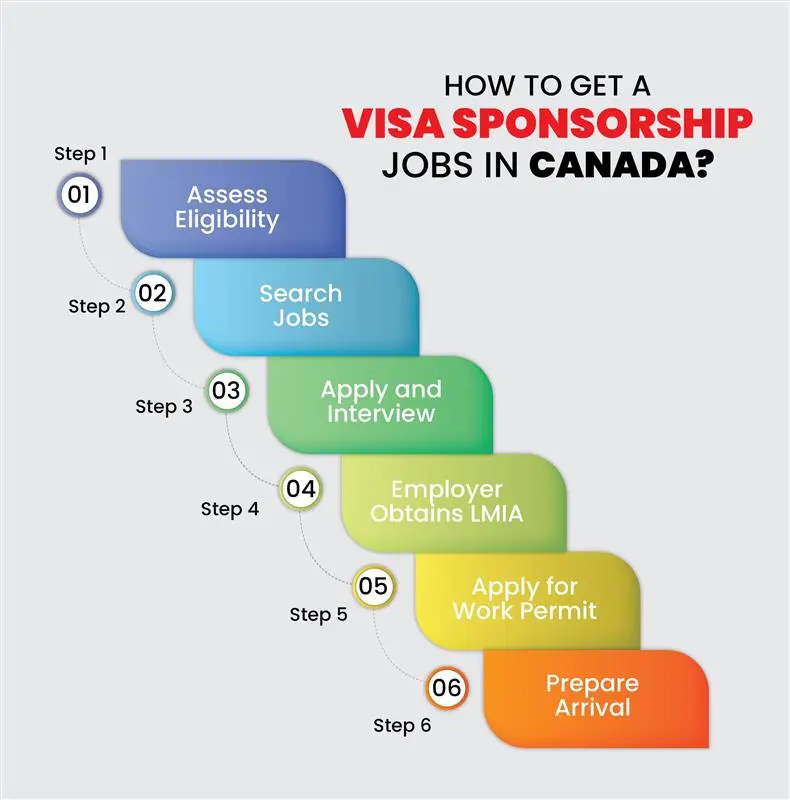
Step 1: Verify Your Eligibility
Ensure your credentials meet Canadian standards. This includes evaluating your education (ECA), maintaining high language scores (IELTS/CELPIP), and ensuring you have a clean record.
Step 2: Targeted Job Search
Use platforms like the Canada Job Bank, LinkedIn, and Indeed. Use specific filters like “LMIA” or “Visa Sponsorship” to find employers already set up to hire foreign nationals.
Step 3: Application & Interviewing
Adjust your resume to the Canadian format. If you receive an interview, be prepared to discuss your timeline and the specific sponsorship programs you are eligible for.
Step 4: The LMIA Process
Once you have an offer, your employer applies for the LMIA. In 2026, processing times vary, but the Global Talent Stream can expedite this to just a few weeks.
Step 5: Apply for Your Work Permit
With a positive LMIA and your job offer, submit your application to Immigration, Refugees and Citizenship Canada (IRCC).
Step 6: Plan Your Relocation
After approval, you can prepare for arrival. Many workers eventually use their Canadian experience to apply for Permanent Residency via Express Entry.
Conclusion
Visa-sponsored jobs remain a primary pillar of Canada’s immigration strategy in 2026. While the system is structured and transparent, success requires targeting the right sectors and verifying that employers are authorized to provide sponsorship. For official updates, always consult the IRCC website.
Quick FAQ
- How do I find sponsoring employers? Focus on the Job Bank’s “Temporary Foreign Workers” section and look for companies in the Global Talent Stream.
- Is an LMIA always required? Most “closed” work permits require it, but some roles under international agreements or provincial programs are LMIA-exempt.
- Can I get PR through these jobs? Yes, most sponsored roles provide the “Canadian Experience” needed to boost your CRS score for permanent residency.